-
Galvanized Base Profile For Auto Windshield
-
Galvanized Tube For Refuelling Tankers
-
Galvanized Panel For The Supermarket Freezers
-
Thick Stainless Steel Panel For Auto Exhaust System
-
Stainless Steel Parts For Auto
-
Cap End For The Auto Exhaust System
-
CNC Stamping Cap End For Auto Exhaust System
-
Stainless Steel Single Cover For Refuelling Tankers
-
Stainless Steel Double Cover For Refuelling Tankers
Metal stamping parts are precision components produced by shaping flat metal sheets into specific forms using stamping dies and presses. Through processes such as blanking, punching, bending, forming, and deep drawing, metal stamping transforms raw metal into high-accuracy, repeatable parts that meet strict dimensional and performance requirements.
Metal stamping parts are widely used because they offer excellent consistency, high production efficiency, and cost advantages for medium- to high-volume manufacturing. From simple brackets to complex structural components, stamping parts are a foundational element in modern industrial production.
Product Functions and Uses
Our stamping parts are designed to perform both structural and functional roles across a wide range of applications:
- Structural support: Providing strength, alignment, and load-bearing capabilities within assemblies
- Connection and fastening: Acting as brackets, clips, frames, housings, and mounts
- Protection and enclosure: Shielding internal components from impact, dust, heat, or electromagnetic interference
- Functional motion control: Enabling hinges, springs, contact points, and mechanical interfaces
Common Applications
- Automotive metal stamping parts such as body panels, chassis components, brackets, reinforcements, and sensor housings
- Furniture metal stamping parts including frames, legs, connectors, hinges, and decorative structural elements
- Consumer goods metal stamping parts used in appliances, electronics, tools, and hardware
- Medical metal stamping parts such as precision clips, housings, supports, and instrument components
Product Features
Our stamping parts are engineered to meet demanding performance and quality standards:
- High precision and repeatability: Tight tolerances ensure consistent performance across large production volumes
- Material versatility: Compatible with carbon steel, stainless steel, aluminum, copper, brass, and specialty alloys
- Excellent surface quality: Smooth finishes suitable for coating, plating, polishing, or direct assembly
- High strength-to-weight ratio: Optimized designs reduce material usage while maintaining durability
- Scalable production: Ideal for both prototyping and mass production
- Cost efficiency: Low per-unit cost once tooling is established
Product Specifications and Parameters
We offer fully customizable metal stamping parts based on customer drawings and application requirements.
Typical specifications include:
- Material thickness: 0.1 mm – 6.0 mm (custom ranges available)
Material options:
Carbon steel
Stainless steel (304, 316, etc.)
Aluminum alloys
Copper and brass
- Dimensional tolerance: ±0.01 mm to ±0.1 mm depending on design and material
Surface treatments:
Zinc plating
Nickel plating
Powder coating
Anodizing
Passivation
Production processes:
Progressive stamping
Transfer stamping
Deep drawing
Compound stamping
Applicable Industries
Our metal stamping parts serve a broad range of industries, including:
- Automotive Industry: Automotive metal stamping parts are essential for vehicle safety, performance, and efficiency. Applications include structural components, brackets, reinforcements, battery housings, and interior fittings.
- Furniture Industry: Furniture metal stamping parts provide strength, stability, and aesthetic value. Common uses include frames, connectors, legs, rails, and functional hardware.
- Consumer Goods Industry: Consumer goods metal stamping parts are widely used in appliances, electronics, kitchenware, tools, and household products where durability and precision are required.
- Medical Industry: Medical metal stamping parts demand exceptional accuracy, cleanliness, and reliability. They are used in medical devices, instruments, equipment housings, and support components.
Additional Industries
- Industrial equipment
- Electrical and electronics
- Construction hardware
- Renewable energy systems
Metal stamping, as a mature manufacturing process, has a unique cost structure compared to other manufacturing methods. Many people initially perceive it as expensive, but a deeper analysis reveals that this cost primarily stems from initial investment, not the overall long-term production expenses.
Initial Investment Primarily Comes from Molds and Equipment
The core equipment for metal stamping is the stamping press and stamping dies. Stamping dies must be custom-made according to the part's shape, size, and processing requirements, which means:
- Die design and manufacturing require professional engineering expertise, processing capabilities, and strict quality control.
- Die costs vary significantly depending on the complexity and precision requirements of the part. Simple dies are cheaper, while multi-stage, progressive, or complex dies are more expensive.
The initial investment cost does appear relatively high, especially when order volumes are small or the product design is very complex.
The Largest Component of the Cost is the Mold
For many metal stamping projects:
- The main cost is not the cost per product itself, but the development and manufacturing cost of the molds and equipment.
- As production volume increases, these mold costs are amortized, significantly reducing the actual price per part.
In other words, the mold is a one-time "fixed asset" payment, but it allows companies to quickly produce a large number of parts at a very low unit cost in subsequent production processes.
Cost Advantages are Very Obvious in Large-Scale Production
Metal stamping is best suited for medium to large-scale production.
Reasons include:
- Stamping production is fast, highly repeatable, and has a short production cycle per piece.
- Once the molds are in use, the production process is automated, and high capacity leads to lower unit costs.
- Suitable for industries requiring bulk supply, such as automotive, home appliances, and consumer goods.
When your order volume reaches a certain scale, the cost per product will decrease significantly, and the overall manufacturing cost will be more competitive.
Small-Batch Production Costs are Relatively High
For low-volume, small orders, because mold costs cannot be amortized quickly:
- The cost per stamped part will be relatively high, and may not be as economical as direct machining or 3D printing.
- If only a small number of samples or prototypes are needed, other manufacturing methods can be considered to avoid high mold costs.
Stamping parts play a vital role in modern manufacturing, offering precision, efficiency, and scalability across industries. From automotive metal stamping parts to medical, furniture, and consumer goods applications, our metal stamping solutions are designed to meet the highest standards of quality and performance. Backed by professional stamping parts services and advanced manufacturing capabilities, we are your trusted partner for precision metal components.
Our Advantages
Comprehensive Quality Assurance
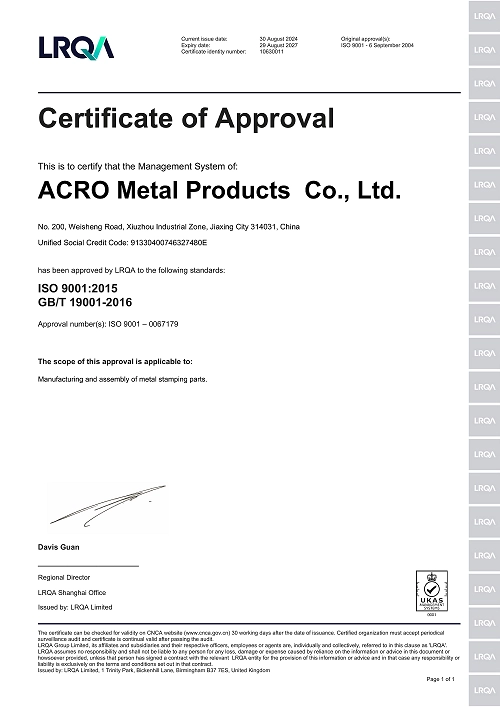
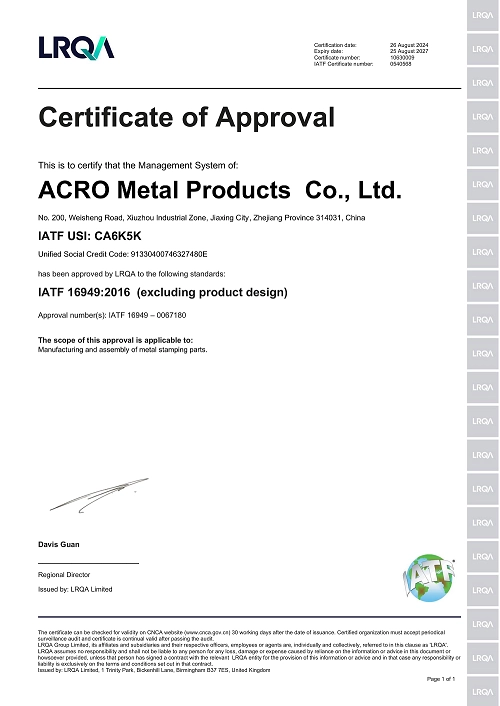
- ISO 9001, IATF 16949, ISO 14001, ISO 45001, RoHS, REACH certified.
| ISO 9001 |
IATF 16949 |
 |
 |
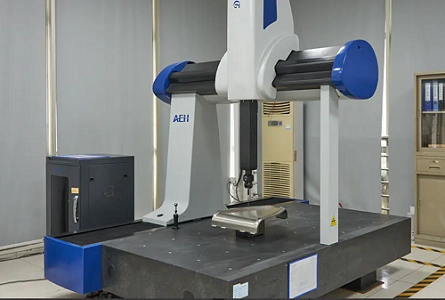
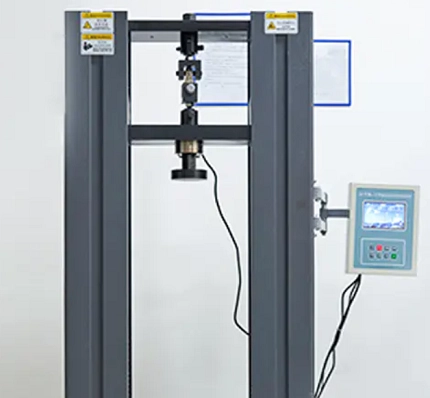
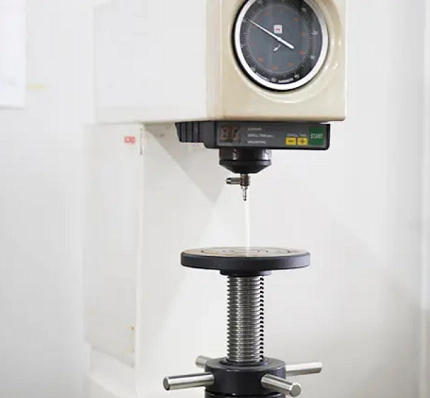
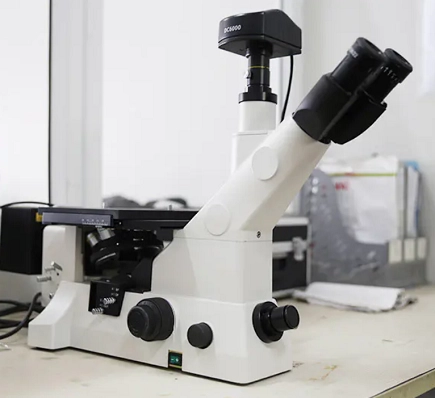
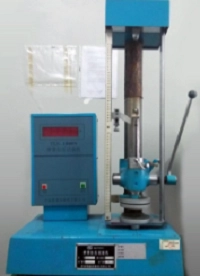
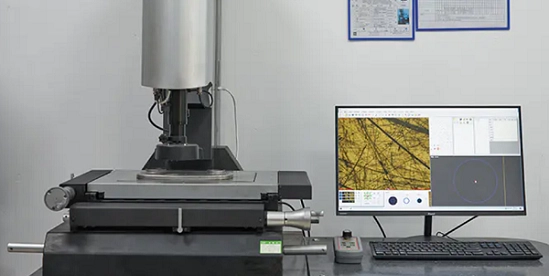
- 100% inspection before shipment (using CMM, salt spray tester, projector, film thickness gauge, tensile tester, etc.)
| AEH Coordinate Measuring Machine |
 |
- Positioning accuracy: 0.0001mm
- Maximum measurement range: 1000*1200*800mm
Extensive Industry Experience
- Over 20 years of professional experience in metal parts processing
- Business operations in over 30 countries worldwide, providing customized solutions
- Utilizing modern production equipment and management systems for efficient production
High Production Capacity
- Supply capacity: 300,000 pieces/month, samples in 3-7 days.
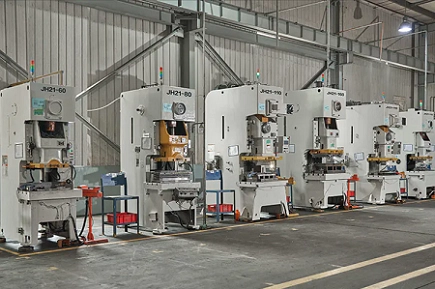
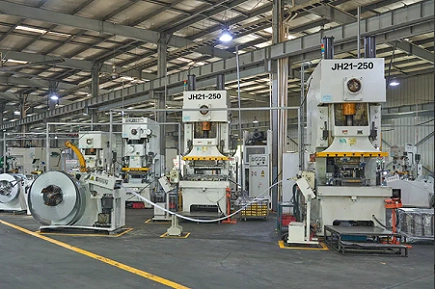
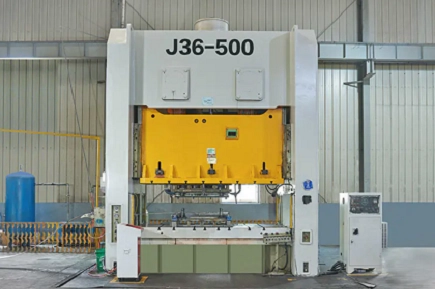
- Equipment includes: Panasonic Ta 1400 Robot, Kawasaki BA006-N, AMADA AC2510 CNC Punching Machine, grinding machines, etc.
One-Stop Service
- Professional engineering team service.
- Mold design & mold manufacturing, independent development.
- Skilled in designing drawings according to customer needs, using software such as: AutoCAD, Pro-E, Solidworks, UG, CAE analysis, etc.
- All engineers hold a bachelor's degree in mechanical engineering or a related field. Senior engineers have over 8 years of work experience.